Why Schools Mistake Behaviour for Character & The Cost of Getting This Wrong
Schools are very good at describing behaviour.
They can catalogue it, track it, code it, escalate it.
They can tell you who’s disruptive, withdrawn, defiant, unmotivated, or “making poor choices”.
What schools are much less good at is understanding why that behaviour is happening, and what it actually represents.
So behaviour gets mistaken for character.
Especially when it comes from a place of distress.
A child becomes “challenging”.
A student becomes “lazy”.
A young person becomes “the problem”.
Once that happens, intervention quietly turns into judgement.
And repair becomes almost impossible.
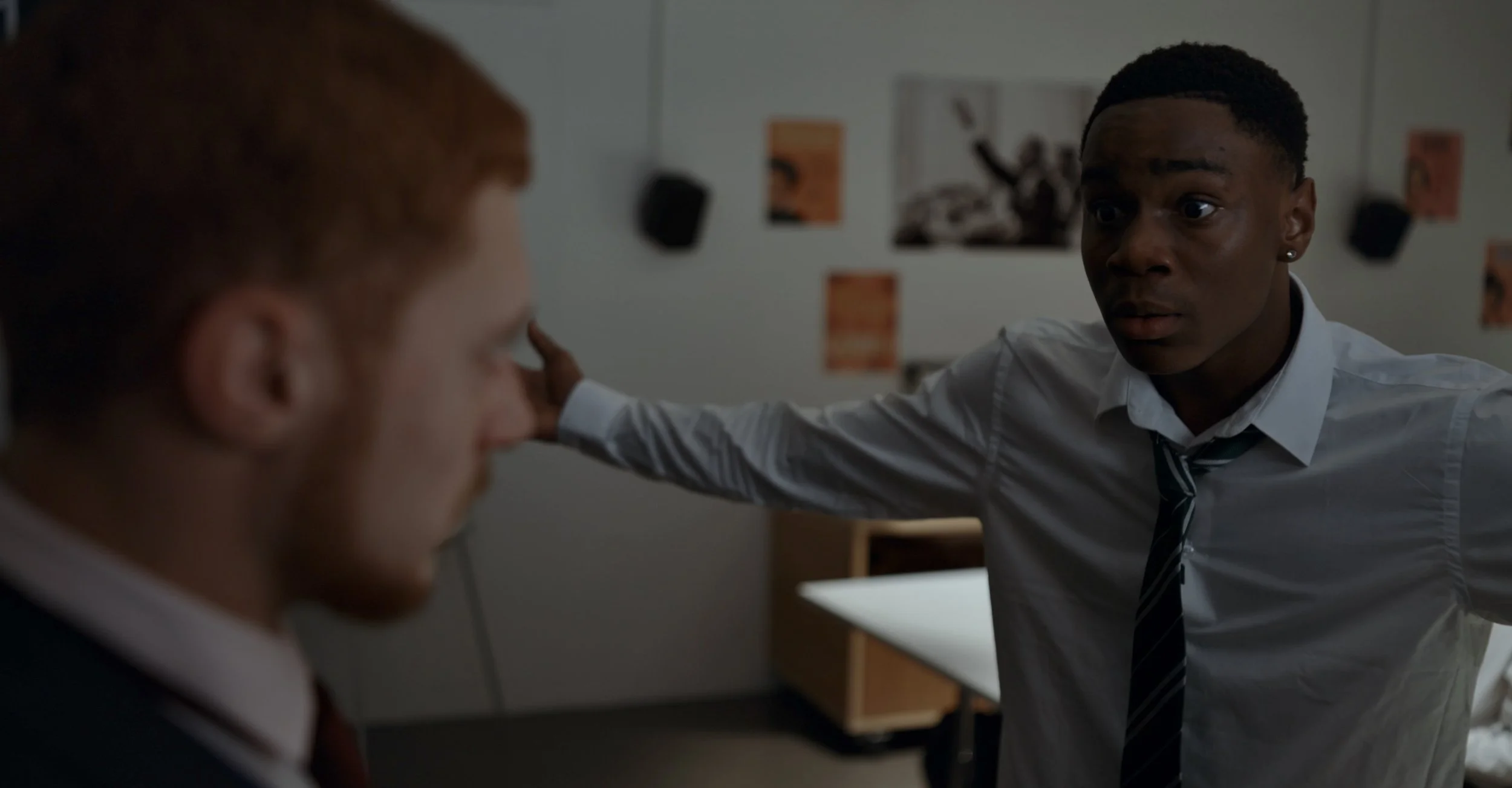
Film Still | Help! I Think My Teacher is Racist (2024) | Dir. Benjamin Turner
Behaviour is visible. Character is assumed.
From a systems point of view, this mistake is understandable.
Behaviour is what schools can see.
It happens in classrooms, corridors, playgrounds. It disrupts lessons. It demands response. It shows up in data.
Character, on the other hand, is invisible.
So schools bridge the gap with assumption.
If a student keeps disrupting, they must lack discipline.
If they don’t engage, they must not care.
If they keep breaking rules, they must be choosing to.
This feels logical.
It is also deeply misleading.
Because behaviour is not a declaration of who someone is.
It is a signal of what they are adapting to.
Behaviour is adaptive, not expressive
One of the most persistent myths in education is that behaviour expresses inner values.
That students act out because they want to.
That compliance reflects motivation.
That calm equals stability.
In reality, behaviour is usually adaptive.
Young people do what works under the conditions they’re in.
They avoid what overwhelms them
They control what feels unpredictable
They perform where recognition is unstable
They withdraw where effort no longer pays off
None of this requires bad character.
It requires pressure.
When a system becomes hard to make sense of, behaviour simplifies.
Nuance disappears. Choice narrows. Actions become blunt.
From the outside, this looks like defiance.
From the inside, it often feels like survival.
Why schools default to character judgements
Schools are under enormous strain.
Targets. Ofsted. Attendance. Results. Safeguarding. Staffing shortages. Behaviour policies that have to work at scale.
Under pressure, institutions do what people do under pressure:
they simplify.
Character judgements are simple.
They turn complex, systemic dynamics into individual explanations.
“This student is difficult.”
“This family doesn’t value education.”
“He just doesn’t want to learn.”
Once behaviour is framed this way, responsibility feels clear — and the system is let off the hook.
But something important has happened.
The explanation has become static.
Character can’t change easily.
Context can.
Why punishment feels effective (and why it fails)
When behaviour is treated as a character flaw, punishment feels appropriate.
If someone is choosing badly, consequences should correct them.
Sometimes this appears to work.
Behaviour improves.
Classrooms calm down.
Data stabilises.
But often what’s happened is not repair but narrowing.
The student hasn’t learned to engage.
They’ve learned how not to be noticed.
They’ve traded expression for compliance.
Risk for safety.
Belonging for invisibility.
From the outside, this looks like progress.
From the inside, meaning is quietly eroding.
This is why behaviour often resurfaces later, louder, harder, and more volatile.
The pressure was never resolved.
It was postponed.
The missing question: what has become unavailable?
When behaviour escalates, schools tend to ask:
“Why won’t they choose differently?”
The more useful question is:
“Which choices no longer feel available — and why?”
Because by the time behaviour is disruptive, the student’s sense of option has already collapsed.
Reflection might feel unsafe.
Asking for help might feel pointless.
Trying might feel humiliating.
Waiting might feel unbearable.
In that state, behaviour is no longer a moral choice.
It is the only move left on the board.
This is why advice often fails.
Why restorative conversations don’t land.
Why “you’re better than this” makes things worse.
Those interventions assume capacity that has already been squeezed out.
Why the same student looks different in different rooms
Every teacher knows this phenomenon.
The student who explodes in one lesson but thrives in another.
The child who’s “impossible” in class but calm after school.
The young person who collapses in one environment and stabilises in another.
This isn’t inconsistency.
It’s context weighting.
Different environments make different behaviours possible.
Predictable routines, relational safety, and meaningful roles expand option space.
Surveillance, constant evaluation, and fragile belonging shrink it.
When schools ignore this, behaviour gets personalised.
When they recognise it, responsibility shifts.
Not away from the young person, but into the system.
What changes when behaviour is read structurally
When behaviour is treated as adaptation rather than character, several things change.
Intervention slows down.
Judgement softens.
Repair becomes possible.
Instead of asking how to control behaviour, schools begin asking:
Where does this student feel seen?
Where does effort still return something real?
Where does belonging feel secure?
Where does uncertainty feel tolerable?
This doesn’t mean removing boundaries.
It means redesigning the conditions inside them.
Strong behaviour cultures don’t come from harsher consequences.
They come from environments where students don’t need extreme behaviour to feel anything at all.
The cost of getting this wrong
When behaviour is repeatedly mistaken for character, young people internalise the judgement.
“I’m bad.”
“I’m difficult.”
“I don’t belong here.”
At that point, behaviour stops being communication and starts becoming identity.
That’s when disengagement hardens.
That’s when exclusion feels inevitable.
That’s when systems lose people, and then blame them for leaving.
None of this is inevitable.
But it requires schools to stop asking what’s wrong with the child
and start asking what the system is demanding of them.
A final word
I work with young people who have been labelled every version of “the problem”.
They are not broken.
They are responding.
Behaviour is not the enemy.
It is the signal.
Until schools learn to read it properly, they will keep punishing adaptation — and wondering why nothing truly changes.
These ideas are explored more fully in my book BLAMED, which examines how responsibility is displaced when systems fail to hold distress.